
🏛️ La Lonja de la Seda: Late Gothic Jewel and the Merchant Heart of Valencia.

"La Lonja de la Seda" (The Silk Exchange) is one of the most remarkable late European Gothic civil buildings. Constructed between 1482 and 1548, during the economic peak of the Kingdom of Valencia, it bears witness to the city's commercial power at the end of the Middle Ages.
Its principal architect, Pere Compte, drew great inspiration from the grand trading halls of the Western Mediterranean—particularly the Catalan-Aragonese tradition—as well as from constant exchanges with Italian cities. During this period, Valencia maintained close trade relations with Genoa, Florence, Naples, Venice, and the entire Mediterranean basin, actively participating in the economic networks connecting Europe to Eastern markets.
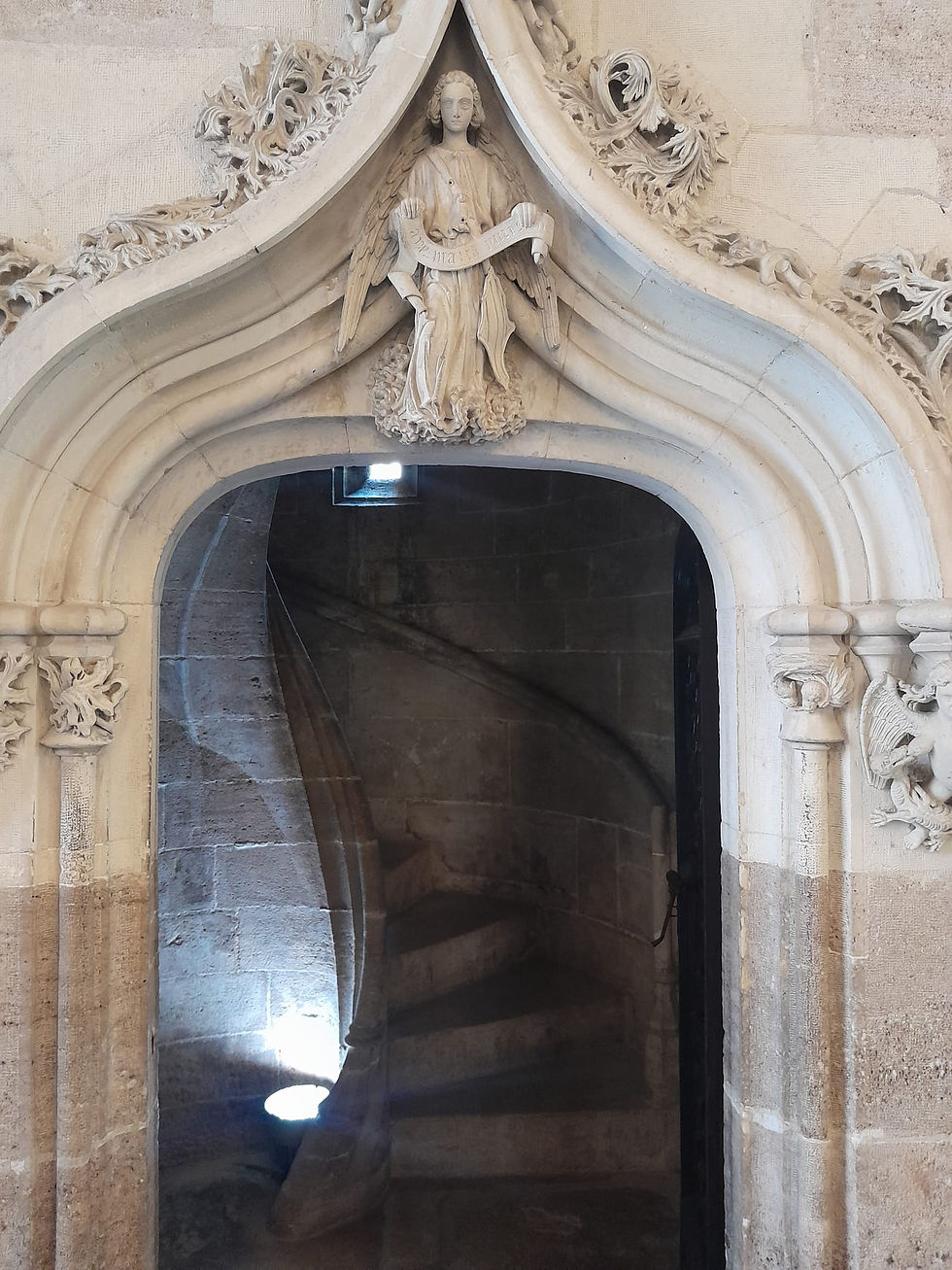
The complex consists of several distinct spaces. The Hall of Columns (Sala de Contratación or Trading Hall), the heart of the Lonja, impresses visitors with its helical columns that rise like a stone forest, creating a vast unified space designed for commercial transactions.
The Consulate of the Sea (Consulat de la Mar), added in the 16th century, housed the institution responsible for settling maritime and trade disputes. The tower contains, among other spaces, a chapel and detention rooms for defaulting debtors. Finally, the Courtyard of the Orange Trees (Patio de los Naranjos) connects the various buildings, bringing light and open air to the complex.
The primary function of the Lonja was to provide an official framework for merchant trading. Here, traders negotiated silk—of which Valencia was one of Europe's main production centers—as well as agricultural products, textiles, spices, and various goods arriving through the port. Contracts were finalized under official supervision in an environment where commercial trust was considered an essential value. The inscriptions decorating the building serve as a reminder of a merchant's moral duties: honesty, honoring one's word, and the condemnation of usury.

Throughout the 16th century, the Lonja remained at the heart of Valencian economic life. It accompanied the period of prosperity that followed the integration of the Crown of Aragon's kingdoms into the Hispanic Monarchy. Its role gradually declined starting in the 17th century amid economic slowdown, competition from other commercial centers, and shifting Mediterranean trade routes.
Beyond its economic function, the Lonja remains a symbol of the Valencian Golden Age today. Its architecture reflects the ambition of a city that, at the end of the 15th century, ranked among the major commercial and financial centers of the Mediterranean. Due to its exceptional state of preservation and architectural quality, it stands as one of the most remarkable testimonies of late medieval European merchant culture.


Comments